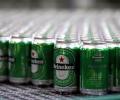
The Competition Commission of India (CCI) on Tuesday said that the proposed additional stake buy in United Breweries (UB) by Dutch major Heineken does not raise any competition concerns, effectively clearing the deal. In its order, the CCI said, "It is submitted that the proposed transaction does not give rise to competition concerns regardless of delineation of the relevant market for the purpose of this filing." UB is the country's largest beer company, while Heineken is the world's second-largest brewer after Anheuser-Busch (AB) InBev.

Zee is estimated to have paid around Rs 225 crore for the complete rights of Radhe. The total revenue that it may earn could be around Rs 135 crore, implying a shortfall of Rs 90 crore.

From helping their employees infected with the Covid-19 virus to vaccinating them or supporting the families of those who might have succumbed to the infection, several companies in India are trying to do their bit in this difficult time. Some have even widened their support net to include all stakeholders as well as an extended community. To the families of the employees it lost to Covid-19, Noida-headquartered IT services and consulting company HCL Technologies is, for instance, paying salary for a year, medical insurance for three years and extending support for their children's education for five years.

Consultants who help lease these properties say this is the steepest decline at least in a decade.

Since April, India has seen multiple strains of the coronanavirus sweep the nation, upending life and businesses alike. Out-of-home retail and discretionary categories such as durables, auto, fashion, lifestyle, hospitality, food services, travel, and tourism have been the worst-hit as Covid cases remain high, leaving state governments with no option but to curtail mobility and economic activity.
According to research firm IDC, a slowdown in smartphone shipments began showing up as early as late February, though companies insist that the March quarter was fine, albeit on a low base.

'I remain optimistic that 2021 will be better than 2020 because we have visibility of vaccinations this year.'
Some companies argue that the culture of staying, working and learning at home will persist for a while, altering lifestyle habits of consumers.
Durable goods companies and retailers say online sales won't compensate for the fall in offline sales.
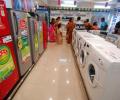
Maharashtra, which contributes between 12 and 15 per cent of appliances sales, announced lockdown-like curbs, meaning there will be no business for the second half of the month as well from the state.

'Post-Covid world will be different from the pre-Covid world.'

According to the order, all factories producing essential goods and services will remain operational at full capacity.

Employees of some top Indian companies were in for a pleasant surprise when they received a mail from their HR team announcing a hike in salaries and bonuses. Led by IT firms and start-ups, HR managers say that while some have offered cash and stock options, others are in a wait-and-watch mode and add the trend will pick up in other sectors. For example, IT giant Cognizant - which had an attrition rate of 19 per cent in the December quarter - has established a $30-million employee retention fund in order to bring down the high attrition rate.

The move is significant since it signals the growing importance of foods in Marico's overall strategy. It also comes six months after Marico stepped into honey, a Rs 1,500-crore category dominated by players such as Dabur.

IPL 2020 was the first sports tournament to surpass 400 billion viewing minutes.

Increase in occupancy will pave way for Hindi blockbusters to release, say multiplex operators.

60-65 per cent of the FMCG industry's overall sales come from urban areas; 35-40 per cent from rural areas.

'There is pent-up demand for cricket after last year when no tournaments were played on Indian soil due to the pandemic.'

Organised players have been the biggest beneficiaries after the lockdowns were lifted. Given real estate is not as expensive now, players want to take advantage of the trend.

Sebamed's campaign for its cleansing bar of the same name, released across print, television, digital and outdoor, has also named Santoor, a popular soap brand from Wipro Consumer Care.
 © 2026 Rediff.com - Advertise with us - Disclaimer - Privacy Policy - Sitemap - Feedback - About us - Terms of use - Grievances